
A bulldozer that works fine in Europe can die before lunch in Sharjah. Not because it is a bad machine. Because weather is not just a forecast. It is a filter.
Pick the wrong equipment for hot sand, and you get overheating, clogged filters, and stalled projects. Pick right, and you barely notice the conditions.
In the UAE, weather means two extremes mostly: brutal heat and blowing dust. But occasional winter chill or rare rain does show up. So let us go through each climate type.
Desert Conditions
This is the main event. Sand, heat, and direct sun for most of the year. Temperatures cross 45°C regularly. Dust hangs in the air. Normal machines suffer here.
Long-boom excavators lead the pack. Models like Kobelco SK380 XD or 50-ton versions come with advanced cooling systems. Their hydraulics stay strong even when outside air is oven-hot. They dig deep into loose sand without losing power. Projects like Sharjah’s Al Dhaid Lake used these for good reason. Sand shifts. A standard excavator would struggle.
Bulldozers with reinforced blades are next. They clear dunes, push sand aside, and level land that has no firm base. Regular blades wear down fast in abrasive conditions. Reinforced ones last.
Wheel loaders like Komatsu WA 900 handle material in dusty terrains. They carry rock, sand, and demolition waste without choking on fine particles. Fuel efficiency matters here because longer run times mean more heat exposure.
What makes these machines desert-ready?
First, cooling systems are oversized. Not just a bigger fan. Better radiators, higher capacity coolant flow, and heat-resistant seals.
Second, dust filtration is serious. Cyclone pre-cleaners spin out heavy particles before air reaches the engine. Sealed air intakes stop fine sand from scratching cylinder walls.
Third, operator cabs have strong air conditioning. Not a luxury. A safety requirement. Heat stress slows reaction times. A cool operator is a safe operator.
For rental companies in Dubai and Sharjah, these three equipment types should be the most available. Contractors will ask for them first.
Extreme Heat – Hot Climates Without Sand
Some sites are hot but not sandy. Think paved areas, indoor industrial zones, or coastal flats. The problem here is still heat, but dust is less aggressive.
Generators need oversized cooling and UV coatings. Direct sun on a metal housing raises internal temperatures fast. A standard generator shuts down. A heat-ready one keeps running.
Every machine in hot climates should have air-conditioned cabs. Not windows that roll down. Real AC. Operators work longer and make fewer errors when they are not sweating through their shirts.
Dust filters still matter, just less than in pure desert. A good filter setup stops fine airborne grit from wearing out moving parts.
Fuel choices also shift. Some machines run better on winter-grade fuel in cold places. In heat, you want fuel that resists vapor lock. Check the manual.
Cold or Winter Conditions
Cold in the UAE is mild compared to northern countries. But nights can drop low enough to thicken hydraulic fluids. Morning starts become sluggish.
Heated cabs help operators stay comfortable. More importantly, anti-freeze coolants keep water from freezing in radiators. Insulated hydraulics maintain fluid flow so pumps do not cavitate on cold startup.
Excavators and loaders used in early morning or winter shifts should get a warm-up period. Five minutes of idle before heavy work. Simple rule. Saves seals and hoses.
Batteries also struggle in cold. A strong battery with clean terminals prevents no-start mornings.
This category is smaller for UAE audiences, but ignore it completely and you will have one bad week every January.
Wet or Rainy Conditions
Rain in the UAE is not common. But when it comes, it floods low-lying sites. Sand turns to mud. Normal tires sink.
Rubber-tired skid steers handle mud better than tracked machines in some cases. They move faster between dry patches and do not pack mud into undercarriages as badly.
Amphibious excavators exist for serious wet work. They float on pontoons and dig from water. Overkill for most UAE sites, but good to know for coastal or wadi projects.
Sealed electrics are non-negotiable in rain. Water finds every gap. A machine with weather-sealed connectors and high ground clearance keeps working while others sit and dry out.
Mud clogs radiators fast. Check cooling fins after any wet shift. Clean them before the next start.
Windy and Dusty Conditions – The Everyday Challenge
Even without desert heat, wind blows dust across UAE sites. This is not seasonal. It happens year-round.
Machines with cyclone pre-cleaners handle this best. A pre-cleaner spins incoming air, throws dust outward, and sends cleaner air to the main filter. That main filter lasts three to five times longer.
Dozers and graders see heavy dust from their own blades. Sealed air intakes are critical. Also check door seals on cabs. Dust finds tiny gaps and coats dashboards, screens, and operator lungs.
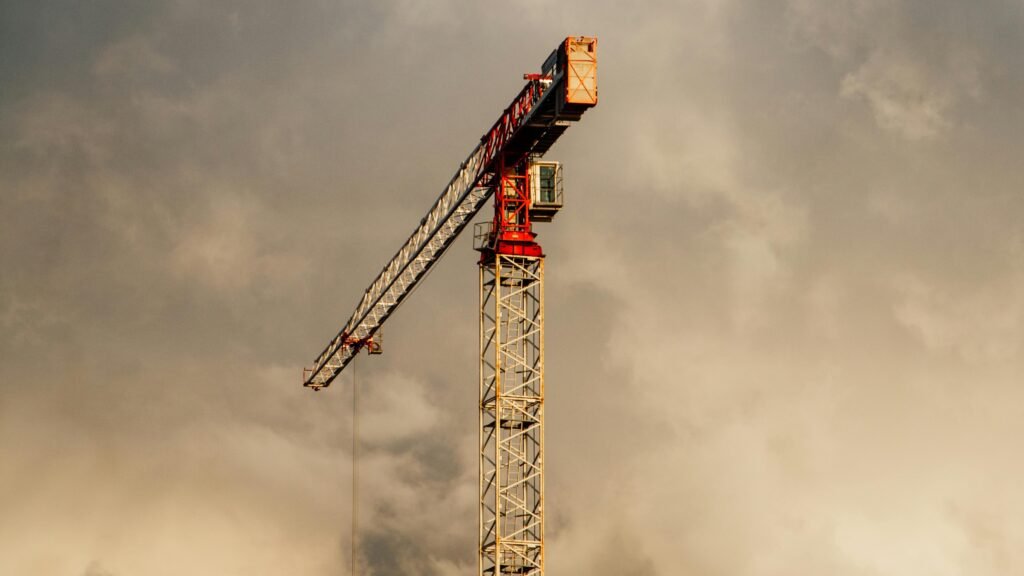
Wind also affects tall machines. Boom lifts and tower cranes need wind speed limits. No operation above certain thresholds. Safety is not about the machine’s strength. It is about stability and visibility.
Operators should wear dust masks when cleaning filters or working in visible dust clouds. Simple protection. Often skipped.
Why This Matters for Rental Choices
A contractor renting for a desert site does not need a general-purpose loader. They need a desert-spec loader.
Rental companies that stock weather-matched equipment get repeat business. Contractors remember who had the right machine when temperatures hit 48°C and the other rental yard said “just try it and see.”
Also, matching equipment to weather reduces breakdowns. Fewer breakdowns means fewer complaints. Fewer complaints means better reviews. Better reviews means more contracts.
Final Loose Ends (Not Everything Is Neat)
One more point. Storage matters too. Machines parked in direct sun all day have hotter starts. If shade is available, use it. If not, light-colored covers reduce heat soak.
Operators should drink water even if not thirsty. Dehydration hits fast in dry heat. A dehydrated operator makes mistakes. Mistakes break machines.
And finally, do not assume expensive means suitable. A high-end machine without proper dust filtration will fail faster than a mid-range one built for sand. Read the specs. Ask about cooling and sealing.
Weather does not wait for project delays. Pick equipment that matches what the sky is doing today, not what you wish it was doing.